
Mold Inspection & Assessment
Discounts for Churches and Religious Facilities | Free Estimates | Competitive Pricing
Discounts for Churches and Religious Facilities
Free Estimates
Competitive Pricing
Mold Consultant Agency Indoor Air Quality
- Mold Assessments
- Mold Protocols
- Clearance Testing
What are Molds
Molds are a natural part of the environment and can be found almost anywhere that moisture and oxygen are present. They belong to the kingdom Fungi and live in moist places such as soil, plants, and dead or decaying matter. Outdoors, molds play a part in nature by breaking down dead organic matter such as fallen leaves, dead trees, and other debris; however, indoor mold growth should be avoided.
There are many types of mold-all of them need water or moisture to grow. When excessive moisture accumulates in buildings or on building materials, mold growth often occurs, particularly if the moisture problem remains undiscovered or unaddressed. Mold growth can occur on:
- Wood
- Paper
- Carpet
- Foods
- Insulations
Health Risks Associated With Indoor Mold Growth Include
- Sneezing
- Runny Nose
- Red Eyes
- Skin Rashes
- Dizziness
- Headaches
- Asthma Attacks
These risks are especially harmful for Children, Elderly people, and those with pre- existing respiratory illnesses.
When mold spores land on damp spots or surfaces, they may begin growing indoors and digesting whatever they are growing on in order to survive. Eventually, molds will destroy the things on which they grow.
- By controlling moisture and reducing mold growth, you can:
- Prevent damage to building materials and furnishings.
- Save Money.
- Avoid potential health risks.

Spores may remain able to grow for years after they are produced. In addition, whether or not spores are alive, the allergens in and on them remain allergenic for years.
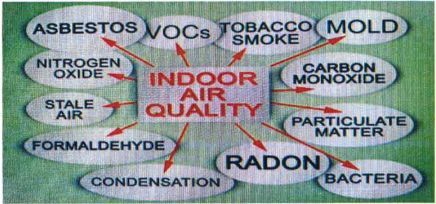
Indoor Air Quality
Importance of Indoor Air Quality
Indoor air quality refers to the quality of the air in a home, school, office, or other building environment. The potential of indoor air quality on human health nationally can be noteworthy for several reasons.
Americans, on average, spend approximately 90 percent of their time indoors, where the concentrations of some pollutants are often 2 to 5 times higher than typical outdoor concentrations. People are often most susceptible to the adverse effects of pollution; the young, older adults, and people with cardiovascular or respiratory disease tend to spend even more time indoors. Indoor concentrations of some pollutants have increased in recent decades due to such factors as energy-efficient building construction, which lacks sufficient mechanical ventilation to ensure adequate air exchange, and increased use of synthetic building materials, furnishings, personal care products, pesticides, and household cleaners.
Learn More About
Apex Technical Services Inc

Share On: